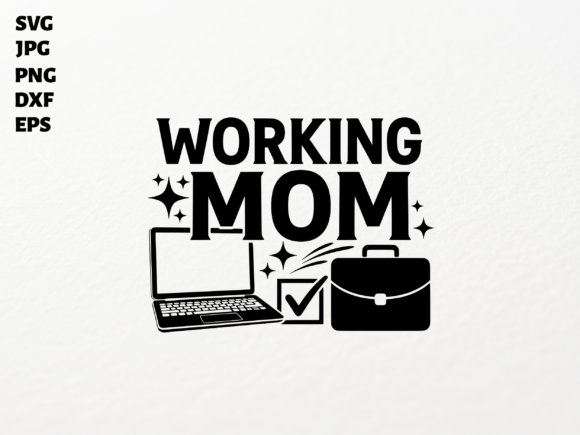
Working Mom SVG for Cricut Sublimation
A Designer’s First Look: Bold, Warm, and Immediately Relatable
When I opened Working Mom SVG for Cricut Sublimation, my first thought wasn’t “cute” or “trendy”—it was “this feels like a real person’s voice.” The bold typography anchors the design, but it’s the subtle balance—clean lines paired with gentle warmth—that makes it land. As someone who tests hundreds of embroidery files a year for client projects and small-batch production, I appreciate when a design doesn’t shout just to be heard. This one speaks with quiet confidence. It’s clearly built for Crafts and Graphics use, but its strength lies in how easily it translates from screen to stitch.
Real-World Test: Embroidering a Linen Tote Bag for a Local Boutique
Last week, I prepped a batch of custom linen tote bags for a neighborhood mom-owned boutique—think organic cotton, medium-weight weave, light natural tone. I chose Working Mom SVG for Cricut Sublimation as the centerpiece because it matched their brand voice: grounded, supportive, unpretentious. After converting the SVG to an embroidery file (using standard digitizing best practices), I stitched a sample on scrap fabric first—always non-negotiable. The result? Crisp lettering, no thread nesting, and excellent readability at 3.5 inches wide. On the finished tote, it read like a quiet affirmation—not a slogan, not a meme, but something you’d want to carry every day.
Where It Shines (and Where It Needs Thought)
Working Mom SVG for Cricut Sublimation works beautifully on stable, medium-to-heavy fabrics: sweatshirt embroidery, embroidered patch backings, pillow covers, tea towels, and aprons. Its clean letterforms hold up well in satin stitch, and the open spacing between characters avoids fill-stitch bleed on denser weaves. I’ve used it successfully on baby embroidery projects too—scaled down to 2.25 inches on a cotton onesie with lightweight cutaway stabilizer—and the message stayed legible without looking cramped.
That said, proceed with care on:
- Stretchy fabric — like ribbed knits or lightweight jersey — unless paired with firm tear-away + topping; letter edges can distort during hooping or stitching.
- Curved surfaces — caps or structured hats — where tight curves may compress fine details; test with a low-density fill stitch if adapting for commercial embroidery.
- Dark or textured backgrounds — especially with lighter thread colors; always check contrast in a printable mockup before finalizing.
- Small hoop sizes under 4×4 inches — while scalable, the design’s visual impact relies on confident proportions. Shrinking below 2 inches risks losing clarity in the letterforms.
What It Adds to Your Finished Product
This isn’t just another machine embroidery design—it quietly elevates perception. When customers see Working Mom SVG for Cricut Sublimation on a handmade product, they don’t just register the words; they feel seen. That builds trust faster than any marketing copy. For Etsy sellers and craft fair vendors, that emotional resonance directly supports higher perceived value—especially on personalized gifts or boutique branding items. I’ve watched buyers pause longer at displays featuring this design versus generic script fonts. Why? Because it reads as intentional, not automated.
It also strengthens brand consistency for creative entrepreneurs who sell across categories—say, matching sweatshirt embroidery and matching kitchen towel sets. The design’s clean rhythm holds up across formats without needing heavy reworking. And yes, it performs well in black-and-white mockups, which matters when you’re building digital product previews or social media assets.
Practical Notes Every Embroidery Designer Should Check
Before stitching your first run—or listing a finished product—run through these quick checks:
- Test on scrap fabric — especially if using a new stabilizer combo or thread brand.
- Review stitch density — high-density fills can overwhelm lightweight linens; consider reducing density by 10–15% for breathable fabrics.
- Confirm hoop size compatibility — most versions fit comfortably in a 5×7 hoop, but verify before digitizing for commercial embroidery.
- Inspect small details — look closely at inner corners of letters like “R” or “G”; some SVG-to-embroidery conversions soften those unintentionally.
- Check thread color contrast — try navy thread on oatmeal linen, charcoal on cream cotton, or soft sage on ivory canvas. Avoid pale yellow on off-white—it disappears.
- Use proper stabilizer — medium-weight cutaway for knits, tear-away for stable wovens, and optional topping for napped fabrics like terry cloth.
- Confirm licensing — since this is marketed as a Graphics asset, double-check whether the license permits commercial use of finished embroidered products or resale of digital embroidery files.
Final Thought: A Design That Works as Hard as Its Audience
Working Mom SVG for Cricut Sublimation earns its place in my go-to folder—not because it’s flashy, but because it’s reliable, emotionally intelligent, and technically sound for real-world embroidery projects. It fits naturally into holiday embroidery collections, nursery decor bundles, and small shop merchandise without feeling forced. For craft business owners building a cohesive line of handmade products, it’s less of a “design” and more of a thoughtful tool—one that helps customers say something meaningful, simply and sincerely. And in a world full of noise, that kind of clarity is rare, valuable, and deeply professional.