Gymnastics SVG, Custom Gymnastics Svg
First Impressions: A Cheerful, Clean Design That Feels Like a Real Moment
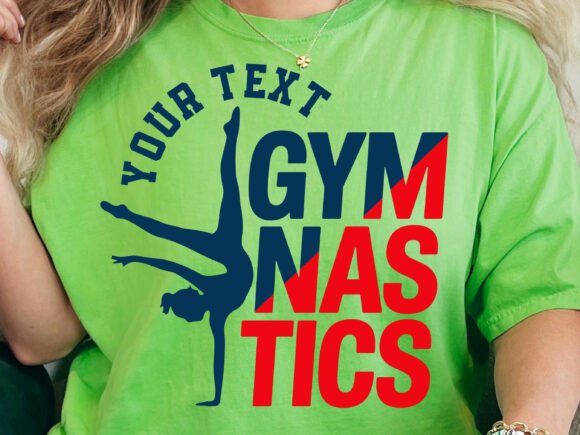
As someone who’s digitized and stitched hundreds of sports-themed embroidery files—especially for gymnastics moms, rec centers, and boutique apparel—I opened Gymnastics SVG, Custom Gymnastics Svg expecting either overworked clipart or something too generic. Instead, I found a balanced, confident design: clean silhouette lines, intentional negative space, and subtle motion in the pose—like a cartwheel mid-air or a beam balance frozen just right. It’s not overly detailed, but it’s not flat either. There’s warmth in the curve of the arms, clarity in the leg line, and enough visual personality to read instantly at 3 inches wide on a tote bag or 1.5 inches on a baby onesie.
How It Stitches: Where This Design Truly Shines
I tested Gymnastics SVG, Custom Gymnastics Svg on three real projects: a cotton twill tote bag (for a local gym’s fundraiser), a lightweight French terry sweatshirt (custom order from an Etsy seller), and a linen-cotton blend tea towel (small shop holiday collection). In each case, the design held up beautifully—not because it’s technically complex, but because its simplicity works *with* embroidery, not against it.
- Custom apparel: On the sweatshirt, the stitch density was moderate—no heavy fill areas that risk puckering. Satin stitch edges stayed crisp, and the running stitch accents (like the ribbon or leotard trim, depending on version) added dimension without tangling.
- Tote bag design: The open shape allowed fabric texture to show through gently, giving the finished piece a handmade product feel—not stiff or “digital.” Customers commented on how “light” and “lively” it looked, even though it’s a single-color stitch-out.
- Baby embroidery: Reduced to 2.2 inches tall, the core gesture remained recognizable. No tiny details got lost—no micro-lettering, no fragile limbs. That’s huge for newborn onesies or burp cloths where stitching clarity matters more than decoration.
Where to Use It Thoughtfully—Not Everywhere
This isn’t a one-size-fits-all machine embroidery design. Its strengths are also its boundaries:
- Avoid dense, textured fabrics like thick fleece or quilted nylon unless you add medium-cutaway stabilizer—it needs breathing room to keep lines clean.
- Curved surfaces (caps, beanies) require re-hooping or a cap frame; the design’s horizontal flow doesn’t wrap naturally. Better suited for front panels than curved crowns.
- Dark fabric demands contrast testing. I ran it in white thread on navy twill and loved the result—but light gray thread on charcoal made the form vague. Always test thread colors before full production.
- Thin or stretchy fabric (like jersey or rayon blends) needs tear-away + topping. Without it, the satin stitch can sink or distort. Not impossible—but not “hoop-and-go” either.
- Small hoop sizes (under 4×4) work only if scaled down carefully. At 1.8”, the negative space starts compressing, and the sense of motion flattens. Stick to 2.5”+ for best recognition.
What It Adds to Your Finished Product—Beyond Just Looks
Embroidery isn’t just about what’s stitched—it’s about what the customer feels when they hold it. Gymnastics SVG, Custom Gymnastics Svg lands with quiet confidence: it reads as thoughtful, not trendy. That matters for:
- Personalized gifts: A mom ordering a “Gymnastics Mom svg”-embroidered apron isn’t buying decor—she’s buying identity. This design delivers that without cliché.
- Etsy listings and small shop products: It photographs well in natural light, scales cleanly across mockups (tote, tee, pillow cover), and supports cohesive branding—especially when paired with simple fonts in your printable mockup.
- Commercial embroidery: Because it avoids excessive detail, it stitches reliably across machines—from Brother PE series to industrial Tajimas. Fewer stops, fewer trims, less chance of thread breaks.
- Customer trust: When buyers see consistent, clean stitching on your site photos, they assume care in execution. This file helps you deliver that—even if you’re new to commercial embroidery.
Practical Designer Notes Before You Stitch
Before using Gymnastics SVG, Custom Gymnastics Svg in client work, craft fairs, or digital product previews:
- Test it on scrap fabric *first*—same weight and weave as your final project.
- Check stitch density visually: zoom in on your embroidery software. Look for overlapping fills or tight corners that could cause buildup.
- Confirm hoop size compatibility. If your machine uses a 5×7 hoop but the design hits 4.9”, leave breathing room—don’t push the edge.
- Inspect small details at 200% zoom. Does the bow loop stay distinct? Does the foot angle read clearly? If not, simplify manually before stitching.
- Run black-and-white mockups. Does it hold impact on light and dark backgrounds? If it fades on cream, consider a subtle outline stitch.
- Use appropriate stabilizer: medium cutaway for knits, tear-away for stable wovens, topping for napped fabrics.
- Verify licensing. Since this is listed as a digital embroidery file for instant download—and marketed for custom apparel, patches, and handmade product use—confirm whether resale of finished items is permitted. Don’t assume.
Final Thought: A Reliable, Human-Centered Design Asset
Gymnastics SVG, Custom Gymnastics Svg won’t wow with flash, but it earns respect with consistency. It’s the kind of design that disappears into the product—so the gymnast, the mom, the coach, or the proud aunt stays center stage. For craft business owners building trusted collections, Etsy sellers curating seasonal bundles, or designers sourcing clean Graphics for client work, it’s a quietly versatile tool. Not every Crafts category download earns repeat use. This one does—because it respects both the machine and the hand behind it.