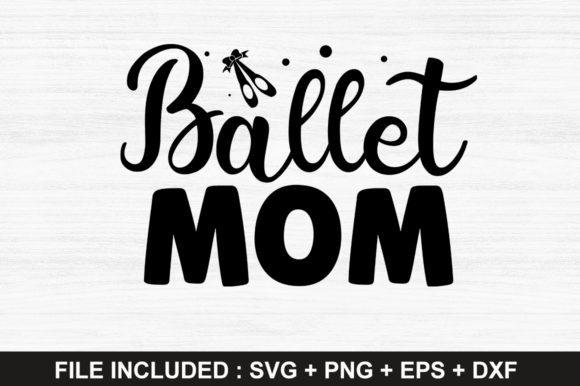
Ballet Mom SVG Design: A Stitcher's Real-World Review
I've been in the embroidery game long enough to know that not every pretty graphic translates well to thread and fabric. When I first opened the Ballet Mom SVG Design, I wasn't looking at it through the lens of a screen designer. I was thinking about how those lines would behave under a needle, on a sweatshirt, at a dance recital, with a hundred proud moms watching. This is the kind of design that carries emotional weight, and if you're going to stitch it, you need it to hold up.
What struck me immediately was the mood. It's not just a ballet-themed graphic. It has a softness to it, a graceful personality that feels earned rather than forced. The silhouette direction, the implied movement, the way the visual weight distributes across the composition—it all suggests someone actually thought about how this would read on a finished product. Too many digital files in the Graphics category look great on a mockup but fall apart when you shrink them down to a left-chest placement or try to run them through an embroidery digitizing process. This one, at least from a structural standpoint, gives me confidence.
I'll be honest about what I'm evaluating here. This is an SVG file, which means it's a vector graphic. For embroidery, you're going to need to digitize it or use it as a template for applique work. But the quality of the source file matters enormously. Clean, smooth cut lines aren't just a nicety—they're the difference between a design that digitizes cleanly and one that creates jagged edges, unnecessary trims, and frustrated stitching sessions.
First Look: What This Design Actually Communicates
The moment I saw the Ballet Mom SVG Design, I pictured a soft heather-gray sweatshirt with the design stitched in a muted rose thread, maybe with a touch of metallic silver for the lettering. It's the kind of graphic that belongs on something worn with pride, not just another item in a craft fair bin. The theme is specific but not niche to the point of being unsellable. Ballet moms are a passionate group, and they love wearing their identity. That's exactly the kind of buyer you want when you're building a craft business or stocking an Etsy seller shop.
From a visual personality standpoint, the design reads as elegant, supportive, and slightly sentimental without being saccharine. That's a tricky balance. If a design leans too cutesy, it limits your customer base. If it's too abstract, it loses the emotional hook. This one sits in a comfortable middle ground, which means it could work for custom apparel, personalized gifts, or even nursery decor for a baby whose mom is already dreaming of dance classes.
Testing It Mentally: The Sweatshirt Scenario
Let me walk you through a real scenario I considered while reviewing this design. I have a client who runs a small boutique specializing in dance-themed merchandise. She needed something fresh for recital season, specifically a design that could go on tote bags and pullover sweatshirts for the moms. I pulled up this ballet svg design and started thinking through the actual production process.
First question: would this work on a medium-weight fleece? Fleece has texture, and texture can eat fine detail. If the design had overly intricate elements or hair-thin lines, I'd be worried about stitch registration and clarity. But reviewing the shapes here, the design appears to have enough substance in its core elements to hold up on a slightly napped fabric. You'd still want to use a quality stabilizer—cutaway, no question—and probably do a test run on a scrap of the same fabric before committing to a dozen units.
Second question: what about lettering? If this design includes any text, the size and spacing are critical. Tiny lettering in embroidery is a notorious troublemaker. Letters under a quarter-inch tall can close up, especially with satin stitch, and suddenly your heartfelt message becomes an illegible smudge. I always recommend testing lettering at actual size on a scrap fabric before running production. If the text is too small, you might need to enlarge the overall design or adjust the digitizing to use a finer running stitch for the smallest characters.
Where This Design Shines Brightest
After spending time analyzing the composition, I can see several product categories where the Ballet Mom SVG Design would perform beautifully. The most obvious is sweatshirt embroidery. A design like this on a crewneck, placed either full-front or left-chest, would sell well at dance studio events or on Etsy. It's sentimental enough for a holiday gift but practical enough for everyday wear.
Tote bag applications are another strong candidate. Canvas totes take embroidery wonderfully, and the flat surface means you don't have to fight with curves or seams. A ballet mom tote, personalized with the child's name or studio, becomes a handmade product that feels intentional and premium. I've seen similar designs sell for thirty to forty dollars at craft fairs, especially when the stitching is clean and the thread colors are thoughtfully chosen.
Don't overlook baby embroidery either. A tiny version of this design on a onesie or a soft cotton blanket, perhaps paired with the baby's name and birth date, would make a gorgeous baby shower gift for a dance instructor or a mom who's already planning tutus and recitals. The key is scaling. You need to check whether the design holds its integrity when reduced to a two-inch or three-inch size. Some vector files lose their personality when shrunk; others hold up because the designer prioritized clean, bold shapes over excessive detail.
For small shop owners, this design could also work as an embroidered patch. Patches are having a moment, and a ballet mom patch sewn onto a denim jacket or a dance bag would sell easily. The production process is slightly different—you'd stitch it on a stable base fabric, add a merrow border or a satin edge, and package it attractively. But the source file being clean makes that whole workflow smoother.
Cautionary Notes: Where You Need to Be Careful
I'm going to be direct about the limitations, because no design is perfect for every application. If you're working with small hoop sizes—say, a 4x4 inch field—you need to measure carefully. Some designs are too wide or too tall for compact hoops, and scaling down can introduce problems with stitch density and detail loss. Always confirm your hoop dimensions before buying any digital embroidery file.
Stretchy fabrics are another area where you need to proceed with caution. Performance wear, thin jersey, and anything with significant spandex content can distort under the needle. If you're planning to stitch this on a ballet mom's racerback tank or a fitted tee, use a strong cutaway stabilizer, consider a topper for textured fabrics, and run a test piece through a wash cycle to see how it holds up. There's nothing worse than a finished product that looks stunning on day one and puckers after the first laundry day.
Dark fabrics present their own challenges. If the design has light-colored elements, they can get lost on a black or navy background. Conversely, dark thread on a dark shirt lacks contrast and impact. I always suggest testing your thread colors on both light and dark fabric swatches, and even running a black-and-white mockup to evaluate contrast. A design that looks amazing in full color on your screen might feel muddy once it's stitched, especially if the fill stitch areas are dense and the fabric color shows through the gaps.
Curved surfaces like caps and hats are tricky territory. The Ballet Mom SVG Design might work on a dad hat or a structured cap, but the curvature of the hat front means the design needs to be digitized with that curve in mind. Flat designs stitched straight onto a curved surface can look warped or distorted. If you're planning a cap project, test the digitized file on an actual cap frame, not just a flat hoop.
Commercial Viability and Licensing Awareness
Here's the part where I remind every creative entrepreneur reading this to do their homework. An SVG file is a digital asset, and how you're allowed to use it depends entirely on the license terms. Can you sell finished handmade products with this design stitched on them? Can you include it in a digital product bundle? Can you use it for printable mockups in your shop listings? These are questions you need to answer before you invest time in stitching and photographing products.
I've seen too many small business owners get into trouble because they assumed a design was cleared for commercial use when it wasn't. The product description says this file is perfect for crafters and small business owners, which is encouraging, but I still recommend confirming the specific license terms. Check whether commercial embroidery on finished goods is allowed, whether there are quantity limits, and whether you need to credit the designer. These details matter for your brand consistency and legal peace of mind.
Stitching for Customer Trust and Product Value
When someone buys a personalized gift from your shop, they're not just buying fabric and thread. They're buying the feeling that the product was made with care and expertise. The Ballet Mom SVG Design carries a theme that resonates emotionally, which means your customers will have high expectations. If the stitching is sloppy, the thread breaks, or the design looks nothing like the listing photo, you lose trust fast. That's why I always say: test the design first, photograph the actual stitched result, and use that photo in your Etsy listing or product page. Real photos build real confidence.
Consider the stitch density when you digitize or prepare this for machine embroidery. A design that's too dense can cause puckering and thread breaks. Too sparse, and the fabric shows through in unattractive ways. The sweet spot depends on your fabric, your stabilizer, and your machine's tension. I can't give you exact numbers because every setup is different, but I can tell you that a well-digitized version of a clean vector file will almost always outperform a poorly digitized version of a messy one. The fact that this file is described as having clean, smooth cut lines is a strong starting point for good digitizing outcomes.
Thread Choices That Make the Design Sing
Color selection can make or break this design. For a classic ballet look, I'd lean toward blush pinks, soft ivories, ballet slipper tones, and perhaps a whisper of gold or silver for elegance. But don't be afraid to experiment. A monochromatic white-on-white version on a soft cotton pillow cover would look ethereal. A bold black-and-gold combination on a canvas tote would feel modern and graphic. The visual appeal of this ballet svg design is flexible enough to accommodate different color palettes, which is a major advantage for handmade product sellers who want to offer variations.
If you're using this as an applique design, fabric selection becomes part of the color story. A sparkly tulle overlay for the tutu element, a metallic fabric for accents, or a soft flannel for a cozy feel—these material choices add dimension that thread alone can't achieve. Applique also reduces stitch count, which speeds up production time and reduces wear on your machine. For production-minded crafters, that's a meaningful consideration.
Final Thoughts from a Practical Stitcher
I've reviewed hundreds of machine embroidery design files over the years, and what I keep coming back to is this: the designs that sell well and stitch well are the ones that respect the medium. The Ballet Mom SVG Design feels like it was created with an understanding of how embroidery works. The lines are intentional. The theme is universally appealing within its niche. The emotional hook is strong without being overly complicated. For a craft business owner, an embroidery designer, or a small shop operator, that's a combination worth investing in.
Your job is to take this clean source file and treat it with the care it deserves. Test on scrap fabric, dial in your thread colors, choose the right stabilizer, and photograph your work honestly. If you do that, the finished products—whether they're custom apparel pieces, embroidered patches, tote bags, or baby items—will reflect the quality that today's buyers expect. And when a ballet mom opens her gift and sees her identity stitched beautifully onto a product she can use and wear, that's the kind of moment that earns you repeat customers and word-of-mouth referrals.
This is a design I'd confidently add to my embroidery library, and I'd recommend it to any maker who serves the dance community, the gift market, or the personalized apparel space. Just remember: a beautiful SVG is the starting point. Your skill, your attention to detail, and your commitment to testing are what turn that digital file into a finished product that people treasure.